That is what separates it from an AI pilot.
A pilot shows that something can be done, on a bounded set of sample data. An implementation makes sure it works every day: with real data, with exceptions and with someone who owns it and adjusts course.
Enschede · same time as you
AI implementation comes down to six steps: choose the process with the most value, redesign the work, connect data and systems, build and test the solution, put human oversight in place and make sure people actually use it. As an AI implementation partner, we do this with mid-sized organisations, from the first analysis to software that runs every day.

Trusted by



Definition
AI implementation is the process that takes AI from idea to everyday use: choosing a process, redesigning the work, connecting AI to your systems and data, and making sure people work with it and the result can be measured.
That is what separates it from an AI pilot.
A pilot shows that something can be done, on a bounded set of sample data. An implementation makes sure it works every day: with real data, with exceptions and with someone who owns it and adjusts course.
Most pilots stall on that execution, not on the technology.
The integration with the CRM or the accounts system is missing, the exceptions in the process have not been designed, or nobody is responsible once the project team has moved on. That is why an implementation starts with the process and is only finished when the work actually runs differently.
An AI implementation partner walks that whole road with you.
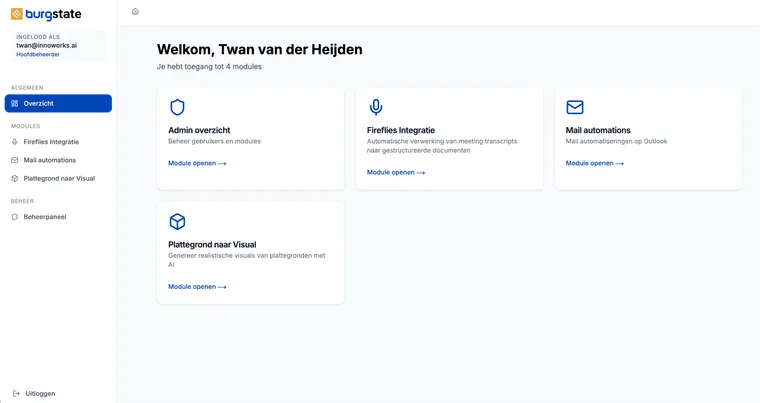
At Ecare it began with an assessment and a growth plan, after which we built the first prioritised opportunity: a system that maps the Dutch mental health care market and puts qualified prospects into HubSpot. At Burgstate an ongoing AI programme has been running since late 2025 on a fixed monthly rhythm, now across four departments.
Step by step
The order in which we introduce AI at mid-sized organisations. Each step delivers something you can decide on before you take the next one.
Start with a process that has volume, lost time or a risk of errors, not with a tool. For each process, check whether the data is accessible and who owns it. An AI audit maps this in 14 days, with an ROI rationale for each opportunity.
Decide what AI carries out, where a person checks and where the exceptions go. Automate the current process one-to-one and you automate the detours as well.
AI only pays off once it can read from and write to your CRM, accounts, documents and email. This is the step pilots skip most often, and the one they later stall on.
A proof of concept on real data shows whether the approach reaches the required quality. Then comes the build: an AI agent, an automation or custom software. A first working agent or automation is often live within 2 to 4 weeks.
Agree where a person reviews or approves, who owns each application and how you comply with the EU AI Act. That keeps responsibility with the organisation, not with the software.
AI only pays off when people use it. That takes explanation, training and feedback from day-to-day work. Measure time, errors and turnaround against the starting point, then extend to the next process.
Choosing a partner
A consultant, a software house and an AI implementation partner each solve a different part of the problem. You can also do it yourself; more on that in the questions below.
| Consultant | Software house | AI implementation partner | |
|---|---|---|---|
| Delivers | Advice, strategy and a roadmap | Software to specification | Working AI in your processes |
| Starts with | The question of where AI pays off | A detailed specification | The process and the result you want |
| Process design | Yes, on paper | Usually out of scope | Yes, and then built |
| Integrations | Out of scope | If they have been specified | Part of the approach |
| Adoption | Sometimes a training session | Rarely | From the start, with explanation and training |
| After delivery | Engagement complete | Maintenance on request | Measure, adjust and extend |
| Right for you if | You are looking for direction and buy-in | You know exactly what you want built | You want AI to land in the work |
Timeline
That depends on the step. Our AI audit takes 14 days. A first working AI agent or automation is often live within 2 to 4 weeks, a first version of custom software within 4 to 8 weeks.
14 days
Weeks 1 to 2.from the start
From week 1, ongoing.After 14 days: A prioritised opportunity report, with an ROI rationale for each opportunity
often 2 to 4 weeks
Weeks 3 to 4. May run until week 6.Often within 2 to 4 weeks: A first working agent or automation
ongoing
Starts between week 5 and 7, then ongoing.At Burgstate on a fixed monthly rhythm since late 2025, now across four departments.
Weeks counted from the start of the AI audit. Fixed scope and price for each step.
In practice
Three engagements, three phases of the same plan: setting direction, building the first opportunity and extending continuously.
5 days
From analysis to product
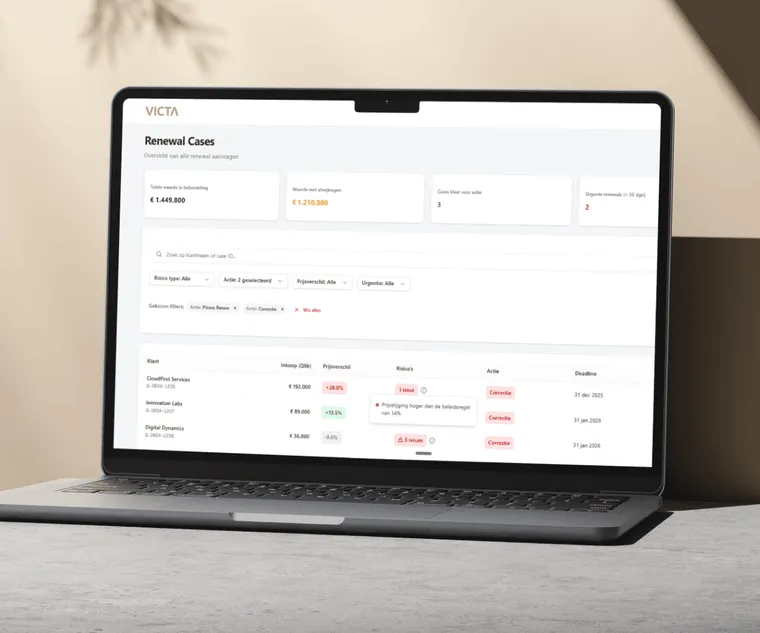
Read how Victa reached a proof of concept in five days5,000+
Mental-health-care organisations mapped
Read how Ecare went from growth plan to a working system4
Departments benefit
Read how Burgstate extends AI month by monthChoosing a firm? Read what an AI implementation partner is or how to choose an AI agency.
Our services
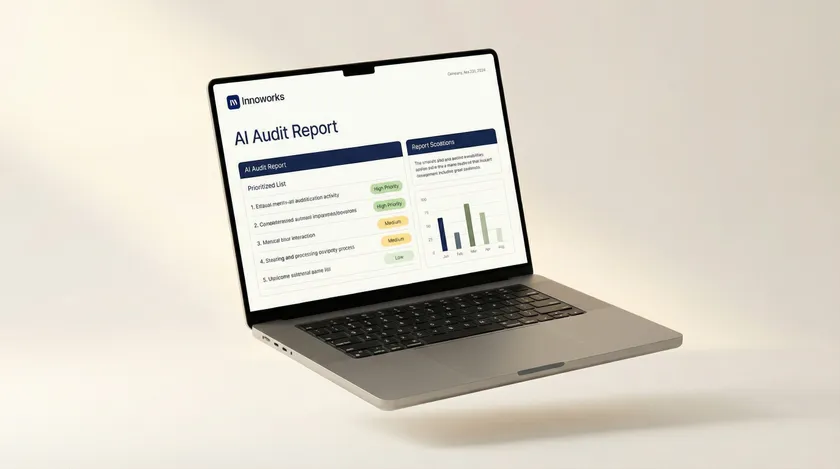
Know where AI truly pays off, in two weeks.
In 14 days we map where AI delivers concrete time, money or quality in your business. No hype, no generic tips. Just a report with prioritised opportunities, a live presentation and a clear next step.
Custom AI software that runs in your work straight away.
We build web apps, automations and agents that fit your business context. No standalone plug-and-play tools, but software that connects to your processes, your data and the people who use it. Human at the wheel, AI does the groundwork.
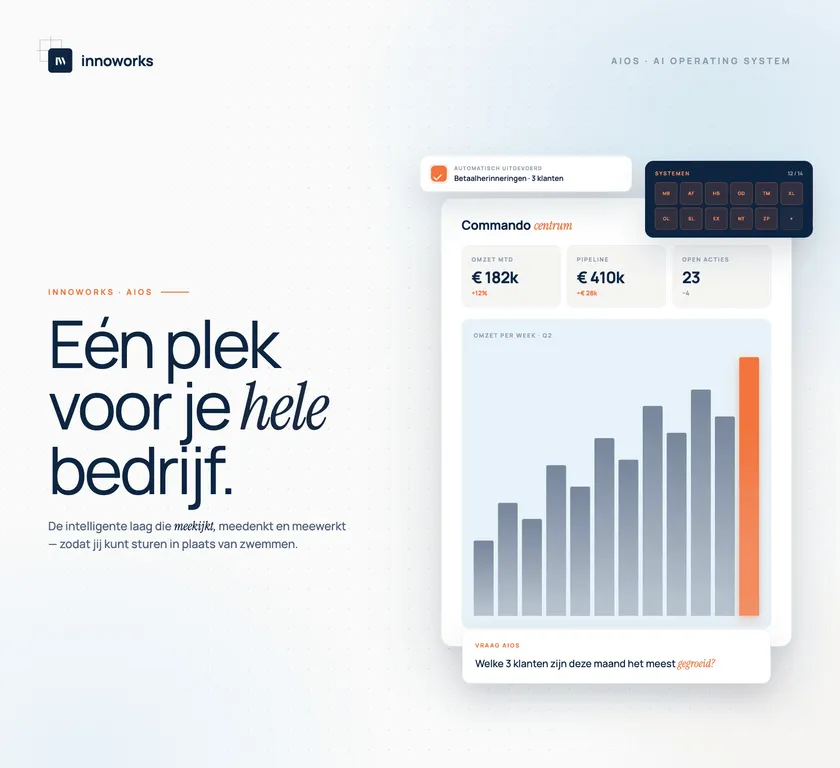
One layer on top that brings everything together.
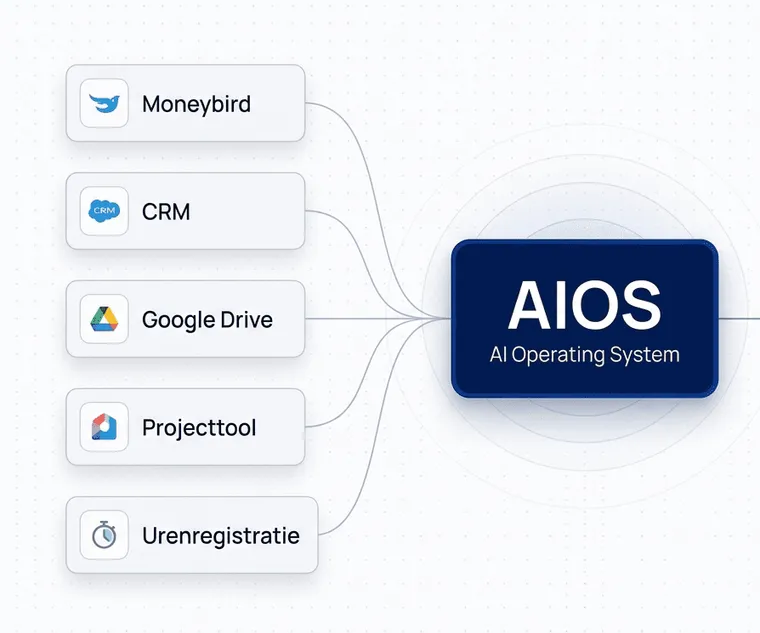
Moneybird, AFAS, HubSpot, Google, a planning tool. All fine systems, and yet no overview. We build an AIOS that sits on top and connects your business into one brain. We started it for ourselves and are now building it for the Dutch SMB market. The first pilots are running.
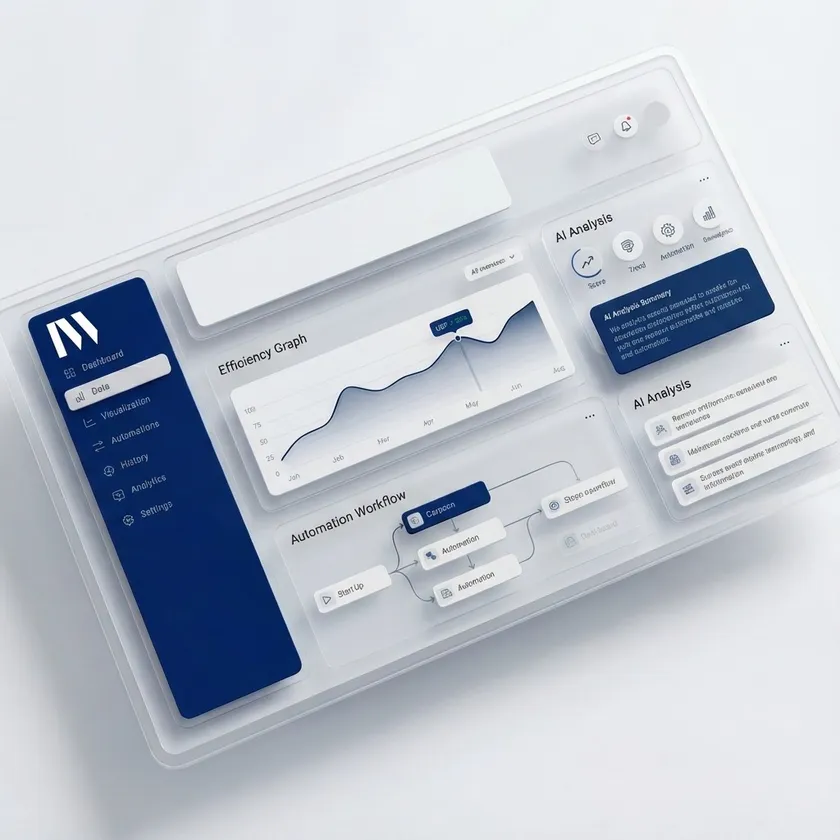
Smart workers that take repetitive work off your team.
An AI agent is not a chatbot. It is a piece of software that carries out a task on its own: triaging email, following up leads, summarising reports, comparing documents. We build agents that work in your business context, with the right boundaries and human control.
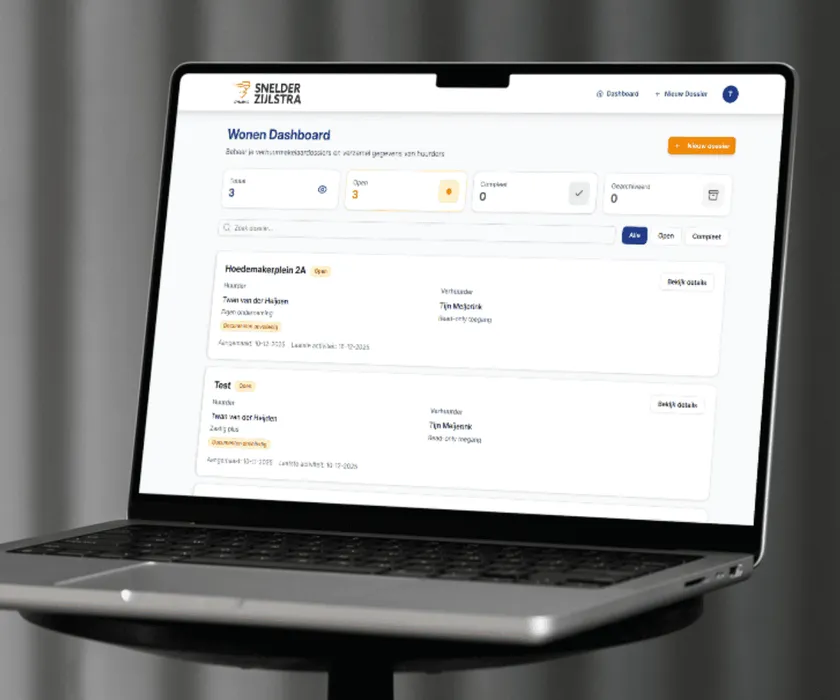
Repetitive work that does itself.
Processing invoices, reading documents, handling customer questions, syncing data between systems. We automate the processes where time and errors sit, with AI agents and integrations on top of your existing software. No more manual work, more time for the real work.

Thinking along, making choices, giving direction.
Not every AI question starts with building. Sometimes the question is which direction, which tool, which path. We are a strategic sounding board for owners and management teams who want to get clear on where AI should land for their business. Practical, honest, and without jargon.
Where to start
AI implementation starts with one process where the gain can be demonstrated. Usually that begins with a 14-day AI audit or a strategy engagement; then we build the first application and extend, process by process. Fixed scope and price for each step.
In six steps. Choose a process with volume, lost time or a risk of errors, and check that the data and an owner are in place. Redesign the process around what AI does well. Connect the systems and data the process needs. Build small, prove it on real data and then build on it. Agree where a person checks and who the owner is. Then make sure staff work with it, measure the result and extend to the next process.
Broadly, three kinds of firm. An AI implementation consultant helps with direction, strategy and a roadmap. A software house builds what you specify. An AI implementation partner does both: deciding where AI pays off, redesigning the process, building and integrating, and staying involved until it measurably works. Innoworks is an AI implementation partner for mid-sized organisations.
That depends on the step. Our AI audit takes 14 days. A first working AI agent or automation is often live within 2 to 4 weeks, a first version of custom software within 4 to 8 weeks. Introducing AI across the whole organisation is an ongoing programme: at Burgstate we have been working on a fixed monthly rhythm since late 2025, now across four departments.
Because a pilot shows that something can be done, but does not make sure it works every day. The solution is not connected to the systems where the work happens, the exceptions in the process have not been designed, or nobody owns it once the project team has moved on. Adoption is often underestimated too: if staff do not know or trust a solution, they will not use it.
Yes, if you have the capacity. Tools such as Copilot or ChatGPT for individual employees can be rolled out in-house, with clear agreements and training. As soon as AI has to work inside a process, with integrations, exceptions and human oversight, you need developers and someone with time for ownership. If that is missing internally, an implementation partner is usually the faster route.
With a process that recurs often, takes a lot of time or is prone to errors, and whose input is available digitally. Think of reading and processing documents, the intake of requests, drafting reports or answering customer questions. Pick one with a clear owner and a result you can measure, so that within weeks you know whether it works.
By involving them from the start. Build with the people who will work with it, explain what AI does and where they make the decisions themselves, and plan time for training and feedback from day-to-day work. The EU AI Act also asks you to support your people's AI literacy (Article 4, in a lighter form since July 2026). At Burgstate, adoption is therefore part of every month, not a training session at the end.
That depends on the number of processes, the systems that need connecting and the pace you choose. We work in steps with a fixed scope and price for each step, usually starting with an AI audit. Book an intro call for an estimate for your organisation.
You know where the friction is. We help you figure out how AI can genuinely fix it.
Not ready for a conversation yet? Get honest AI advice first →
30 minutes. Online or in Enschede. You decide.