

Data foundation for AI

The data foundation for AI: one source of truth.

A data foundation makes sure your business data is connected, reliable and accessible, with one leading source and an owner for every piece of data. Without that foundation, AI gets stuck in pilots. We put it in place with mid-sized organisations step by step, starting with the process where AI needs to work first.

Data foundation for AI

Trusted by

Definition

What is a data foundation?

A data foundation is the base underneath AI and reporting: your systems are connected, every piece of data has one leading source and an owner, quality is monitored and it is agreed who may see what. That way people and software work with the same, up-to-date information.

AI projects rarely stall on the model.

They stall on the data underneath: customers with different names in three systems, figures that differ by department, information the software cannot reach. An AI agent that acts in your CRM or your accounts is only as reliable as the data in them. What works in a pilot on a cleaned-up sample set breaks on the real data.

A data foundation is not the same as a data warehouse, and it is not a multi-year data programme.

For a mid-sized organisation it comes down to a few clear choices: which system leads for customers, orders and figures, how those systems exchange data, who owns it and who may see what. You make those choices process by process, starting with the process where AI needs to work first.

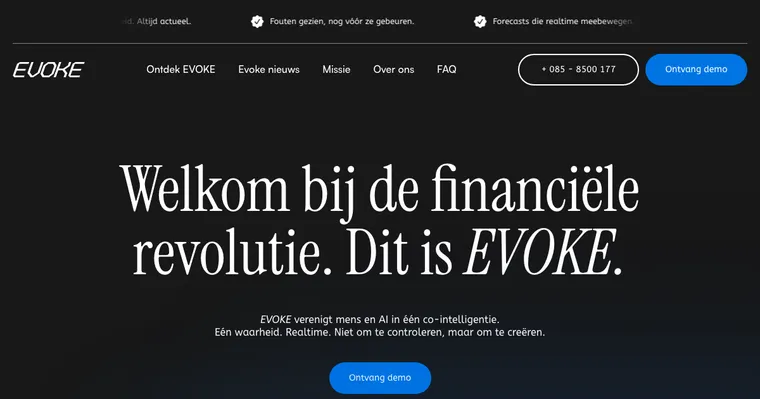
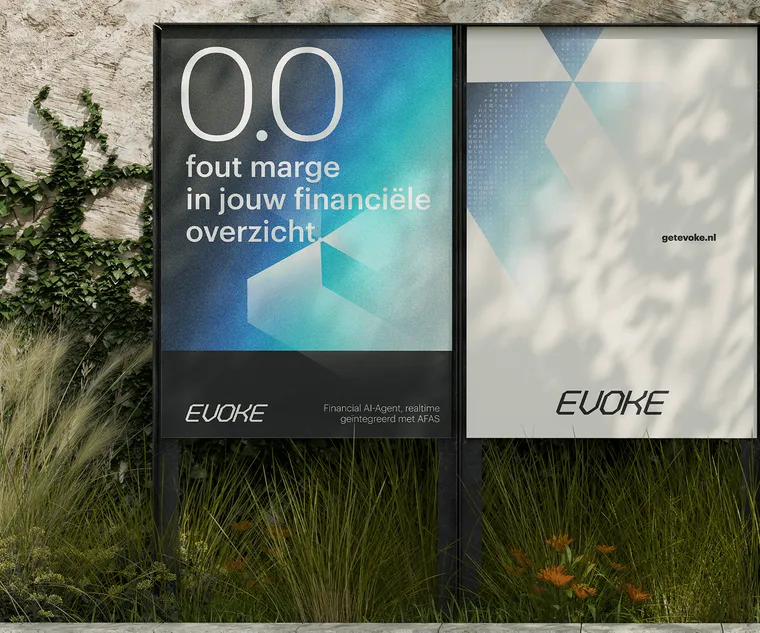
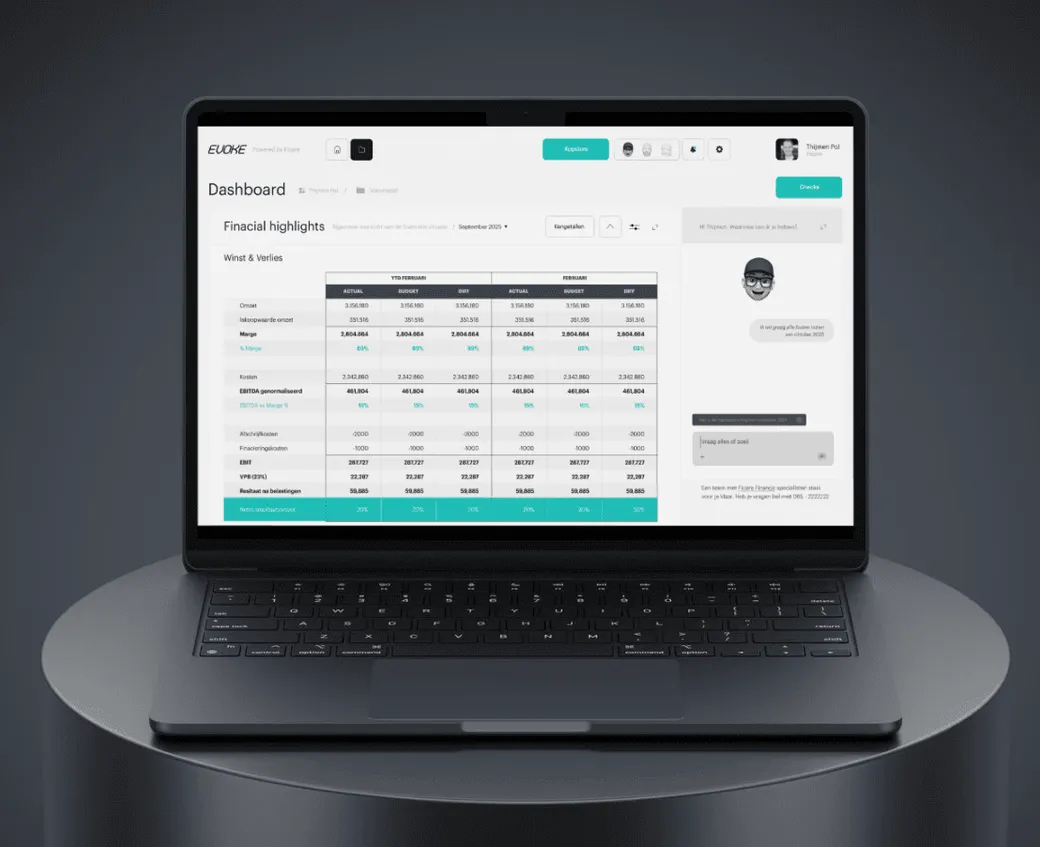
That is how we built an integration with AFAS and a single, unified data layer for EVOKE, with controls down to entry level.

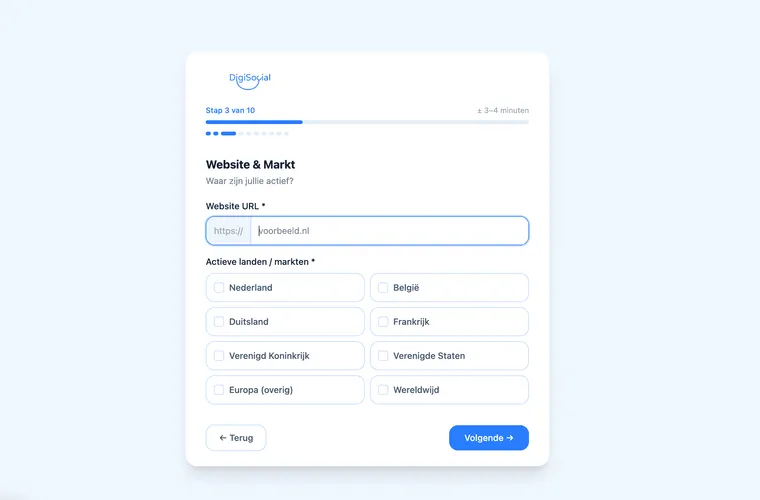
The automatic controls run on that layer, and you can ask questions about the figures in plain language. At DigiSocial, for each module we first made sure the right data came in from more than ten sources and systems, before we built the AI processing.

Building blocks

Six building blocks of a data foundation.

Together they decide whether AI can work with your own data. You do not build them all at once: for each process you decide which ones are needed.

  1. Step 1: One source of truth

    One leading system for each piece of data: customers in the CRM, invoices in the accounts, projects in the project tool. Other systems read from it instead of keeping their own copy. That is what a single source of truth means in practice.

  2. Step 2: Integrations between systems

    Systems exchange data automatically through API integrations or, with more than two or three systems, through a single integration layer. No retyping and no exports, and AI can read and write where the work happens.

  3. Step 3: Data quality

    Data is accurate, complete, up to date and entered the same way everywhere. You safeguard that at the source: fixed forms and checks at input, and flagging of duplicates and anomalies.

  4. Step 4: Master data

    Core data such as customers, products, suppliers and employees exists once, spelt one way. Master data management determines which system leads and how changes flow through to the other systems.

  5. Step 5: Ownership and governance

    An owner for each data domain, fixed definitions (what counts as an active customer?) and agreements on retention periods. For a mid-sized organisation, data governance does not have to be a committee; a few clear agreements are often enough.

  6. Step 6: Access and security

    It is set down who may view or change which data, for people and for software. An integration or AI agent gets access only to what it needs, with a log of what is exchanged.

Data architecture

Data warehouse, integration layer or AI Operating System?

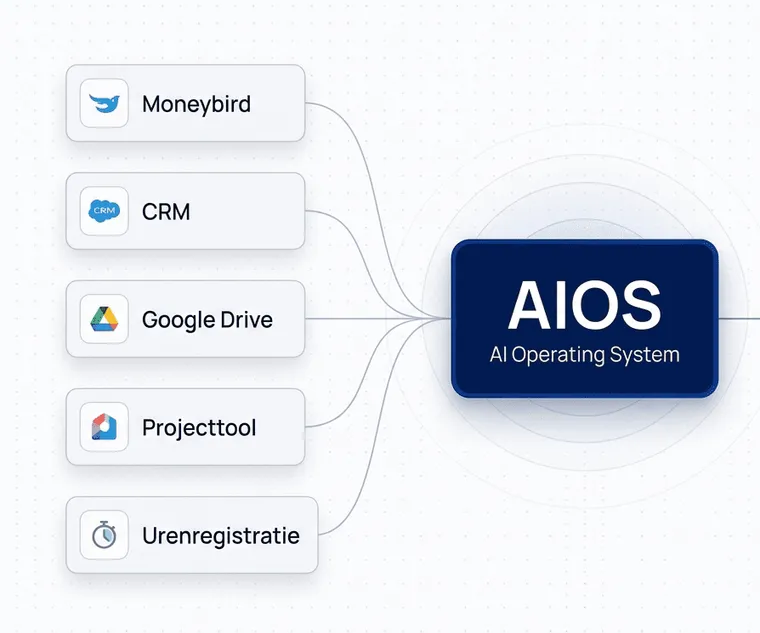
Three parts of a data architecture that are often confused. They are not alternatives: in many organisations they sit on top of each other, with the integrations as the base.

Choose which model to highlight
Data warehouse Integration layer AI Operating System
What it is A central database of collected, cleaned-up data Integrations through which systems exchange data An AI layer over your systems that reads data and takes over work
What it is for Reporting and analysis Processes that run without retyping Answering questions and taking over work with AI
How current Usually refreshed periodically, overnight for example Immediate or near-immediate Reads the current data from the connected systems
Works with History and trends across systems Data that moves between systems: customers, orders, invoices Data, documents and knowledge from all your systems
Typical question How is our margin developing quarter by quarter? Is this order in the accounts as well? How many invoices are outstanding, and with whom?
You need it when You want to run analyses across several systems and years You currently move data between systems by hand AI has to work with your business data, not just with individual documents
Order Added when the analysis question calls for it Usually first: the base under the other two Builds on the integrations

In practice

What a data foundation looks like in practice.

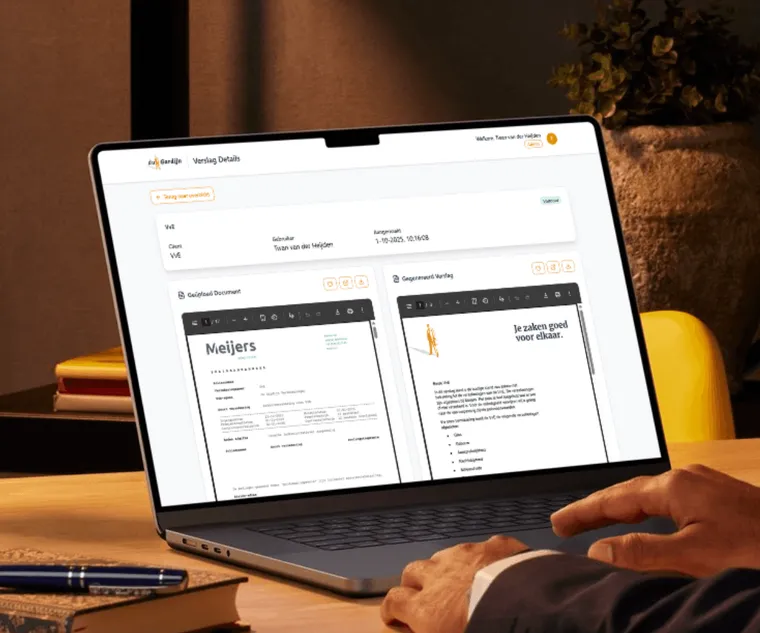
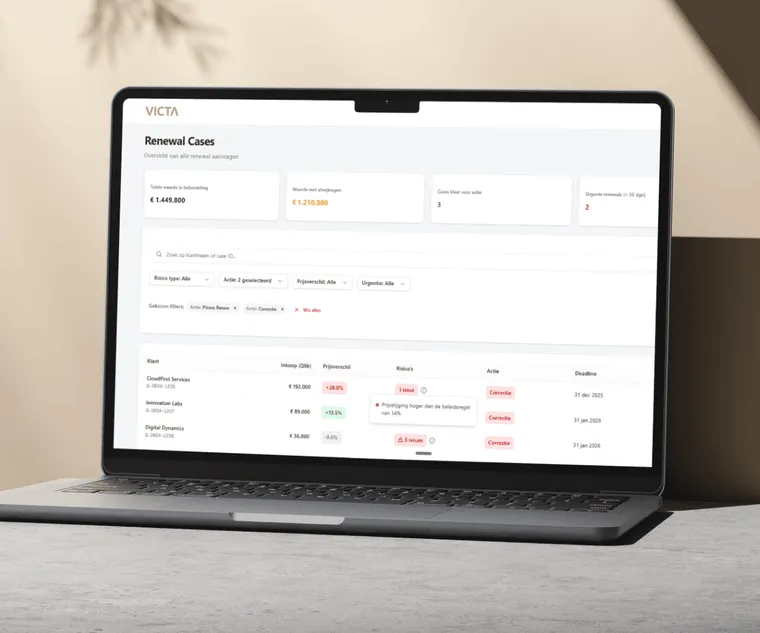
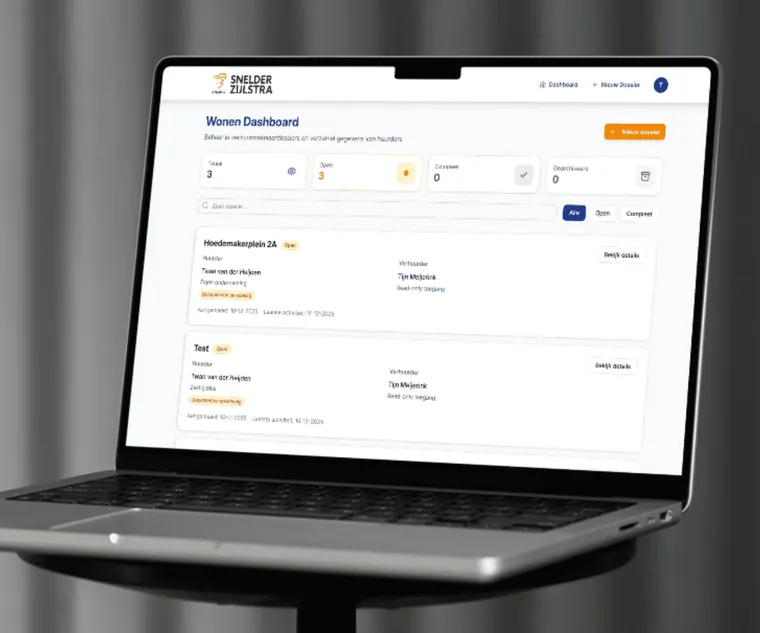
Three engagements in which the work started with the data: one source of truth in the figures, more than ten sources under one foundation and a dataset as the basis for sales.

Further reading per building block

  1. 01 One source of truth
  2. 02 Integrations
  3. 03 Data quality
  4. 04 Master data
  5. 05 Ownership and governance
  6. 06 Access and security

Want to know where you stand first? The AI audit maps out in 14 days which data and integrations your first AI application needs. Once the foundation is in place, you build an AI Operating System on it. The data foundation is one of the six building blocks of an AI operating model.

Our services

From frustration to solution, this is what we do.

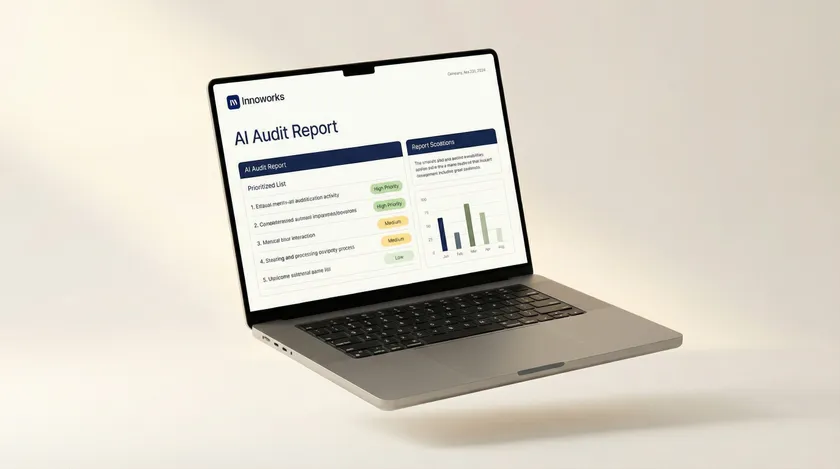
AI audit example

AI audit

Know where AI truly pays off, in two weeks.

In 14 days we map where AI delivers concrete time, money or quality in your business. No hype, no generic tips. Just a report with prioritised opportunities, a live presentation and a clear next step.

14 days From intake to report Fixed lead time
3 deliverables Report, presentation, roadmap Concrete and measurable
Quick wins Scored on impact and feasibility What first and what later
Evidence ROI per opportunity in euros No gut feeling
Learn more

View all services

Where to start

Start with one process, not with all your data.

You do not lay a data foundation for the whole organisation in one go. You start with the process where AI needs to work first: which systems and data it needs, who owns them and what has to be connected or cleaned up. A 14-day AI audit maps this out. Then we connect and build, process by process. Fixed scope and price for each step.

Frequently asked questions

Questions you probably have too.

Still have questions? Get in touch
What is a data foundation?

A data foundation is the base on which AI and reporting work with your business data. It consists of connected systems, one leading source for each piece of data (a single source of truth), monitored data quality, an owner for each data domain and agreements on who may see what. It is not a product you buy, but a set of choices and integrations you put in place step by step.

Why does AI need a data foundation?

Because AI acts directly on your data. An AI agent that looks up a customer, checks an invoice or drafts a report takes over every error in the data: duplicate customers, outdated addresses, figures that differ between systems. Pilots often run on a cleaned-up sample set and stall as soon as they work on the real data. A data foundation makes sure an application can run on the real data.

Do you need a data warehouse for AI?

Not always. A data warehouse is a central database in which data from different systems is collected and cleaned up for reporting and analysis, usually refreshed periodically. That is valuable for trends across several years and systems. AI that works inside a process mainly needs current data from the systems where the work happens, and for that, integrations matter more. So start with the integrations for the process you want to improve, and add a data warehouse when the analysis question calls for it.

What is a single source of truth?

A single source of truth means that each piece of data has one leading place. Customer data comes from the CRM, invoice data from the accounts, and other systems read from there instead of keeping their own copy. It does not mean that all data sits in one system. At EVOKE, AFAS is the source: a unified data layer on AFAS gives one version of the truth in the figures.

What is data governance for a mid-sized organisation?

Data governance is the set of agreements on who owns which data, how it is defined, who may view or change it and how long you keep it. For a mid-sized organisation that is not a committee or a thick policy document, but a few clear agreements: an owner for each domain such as customers, finance and projects, fixed definitions, access rights and retention periods in line with the GDPR. With AI in the picture, you also set down which data an AI application may use.

What is master data management?

Master data management (MDM) is the management of your core data: customers, products, suppliers and employees. The aim is for that data to be the same, complete and current in every system. To get there, you decide for each type of core data which system leads, who may make changes and how those changes flow through to the other systems. A mid-sized organisation usually does not need a separate MDM platform to get started; integrations and clear agreements solve most of it.

What is data architecture?

Data architecture is the design of how data flows through your organisation: which systems there are, which system leads for which data, how they are connected and where reporting and AI get their data from. Its value lies in the choices it forces: no double entry, no conflicting figures and a clear place for every new application.

What is the difference between a data warehouse, an integration layer and an AIOS?

A data warehouse collects data for reporting and analysis over longer periods. An integration layer lets systems exchange current data, so processes run without retyping. An AI Operating System is an AI layer over your systems that reads data, answers questions in plain language and takes over work. They do not exclude each other: the integrations usually form the base, the AIOS builds on them and a data warehouse is added when the analysis question calls for it.

What does it mean to be data-driven?

Being data-driven means that decisions and processes run on current, reliable data instead of on gut feeling or last month’s figures. It does not start with a dashboard, but with data that is right: connected systems, one source for each piece of data and an owner who monitors its quality. From there you let more and more run on that data, step by step, from reports that are no longer built by hand to AI that answers questions and takes over work.

How long does it take to build a data foundation?

That depends on the number of systems and the state of the data. An AI audit maps out in 14 days which data and integrations the first process needs. An integration between two systems with good APIs is often live within a few weeks. We build an integration layer across several systems in phases, and each phase already delivers something. So it is not a multi-year programme before anything works.

What does a data foundation cost?

That depends on the number of systems, how easy they are to connect and how much needs cleaning up. We work in steps with a fixed scope and price for each step, usually starting with an AI audit. Book an intro call for an estimate for your organisation.

You can feel it has to change,
we show you how.

You know where the friction is. We help you figure out how AI can genuinely fix it.

Not ready for a conversation yet? Get honest AI advice first →

30 minutes. Online or in Enschede. You decide.