



AI operating model

The AI operating model: your organisation, redesigned.

An AI operating model is a target operating model in which AI carries out a fixed share of the work: which tasks AI performs, who decides, which data and systems sit underneath and how it is governed. We help mid-sized organisations design it and build it.

AI operating model

Trusted by

Definition

What is an AI operating model?

An AI operating model is the way an organisation is set up when AI carries out a fixed share of the work: which tasks AI performs, which people make the decisions, which data and systems sit underneath, and how it is all governed and improved.

Start with the concept itself.

An operating model describes how an organisation delivers its strategy in practice: which processes run, who does what, which systems and data sit underneath and how the organisation is managed. The target operating model (TOM) is the desired future state: the design of how your organisation will work. The gap between today and that TOM is your change agenda.

An AI operating model is the AI version of that target operating model.

It adds a new kind of worker: software that reads, decides within set limits and finishes the job. AI is not a separate discipline alongside the rest; it touches every part. Processes are redesigned around what AI does well, roles shift from doing the work to checking and improving it, and data has to be in order because AI acts on it directly.

Without that design, you end up with isolated pilots that never scale.

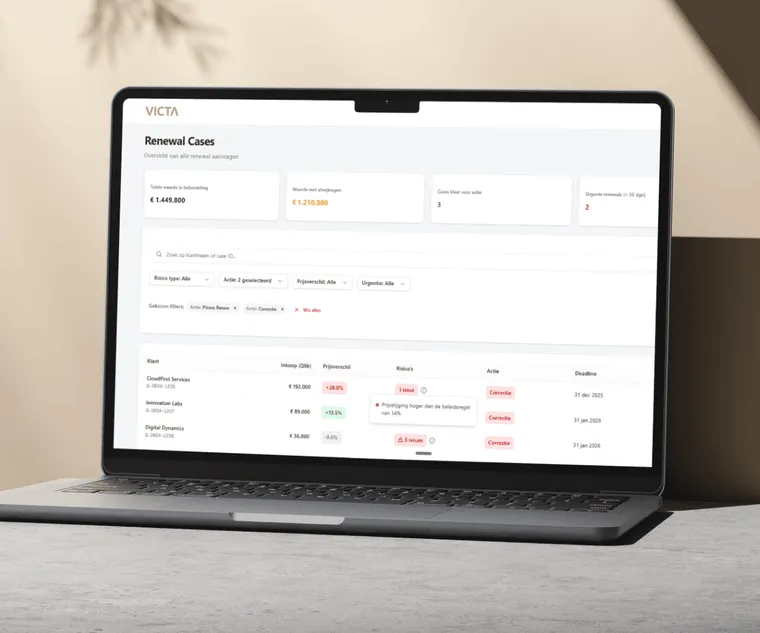
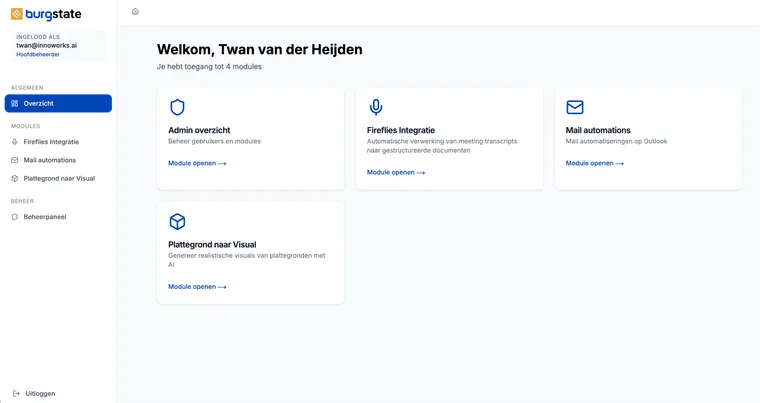
That is why we start small and concrete: one process, one team, a measurable result. From there we build layer by layer, until AI is a natural part of how the business runs. At Burgstate we have worked this way since late 2025, month by month, on an ongoing AI programme that now spans four departments.

Building blocks

Six building blocks of an AI operating model.

The same building blocks as in any target operating model, with AI as a new kind of worker. Together they decide whether AI stays an experiment or becomes a fixed part of how you run the business.

  1. Step 1: Strategy and value

    What AI contributes to: which goals, which processes and how you measure the return. Without this, you get isolated experiments.

  2. Step 2: Processes

    Work redesigned around what AI does well: what AI carries out, where a person checks and where the exceptions go.

  3. Step 3: People and roles

    Who owns it, which roles shift from doing the work to checking and improving it, and which skills that requires.

  4. Step 4: Data and systems

    Connected systems and reliable data, so AI can work with your own information. This is the layer that is missing most often.

  5. Step 5: Governance

    Agreements on use, data and human oversight, a register of AI applications and the obligations under the EU AI Act.

  6. Step 6: Continuous improvement

    Measuring what AI delivers, adjusting course and extending it. An AI operating model is never finished: it grows with what the technology can do.

Comparison

From a traditional to an AI operating model.

How an AI operating model differs from the traditional operating model most organisations work with today, and from simply rolling out tools.

Choose which model to highlight
Traditional operating model Rolling out tools AI operating model
Who does the work People, supported by software People, with standalone AI tools alongside AI carries out the work, people steer and check
Processes Designed around manual work Unchanged, with a tool added Redesigned around what AI can do
Data Scattered across systems Per tool, often copied Connected, one source of truth
Governance Line management Often not arranged Ownership, an AI policy and a register
Growth More work needs more people Scattered time savings, hard to measure Growth without a matching rise in headcount

In practice

An AI operating model, built in practice.

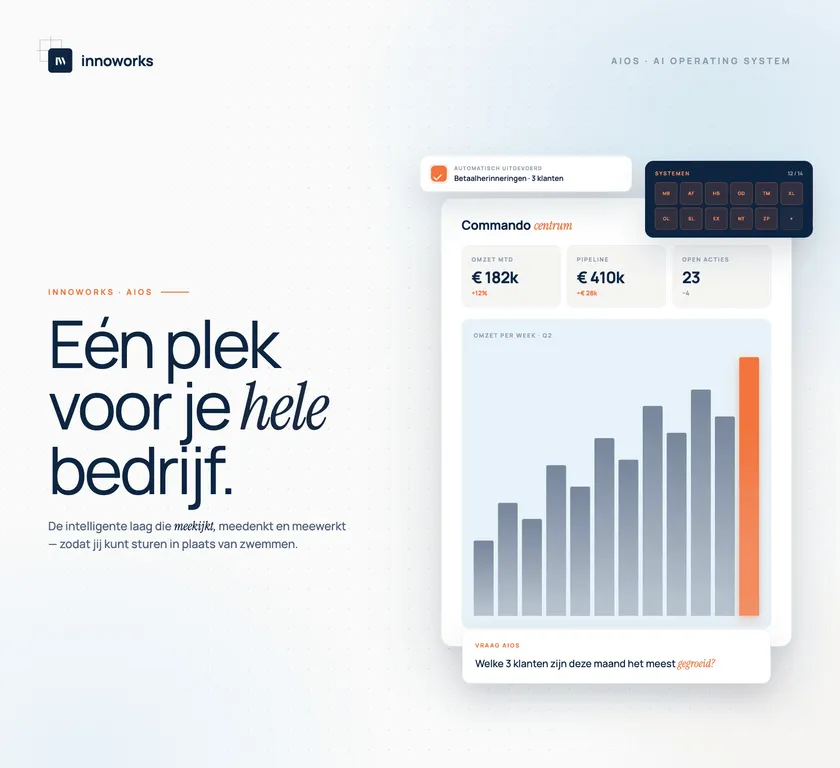
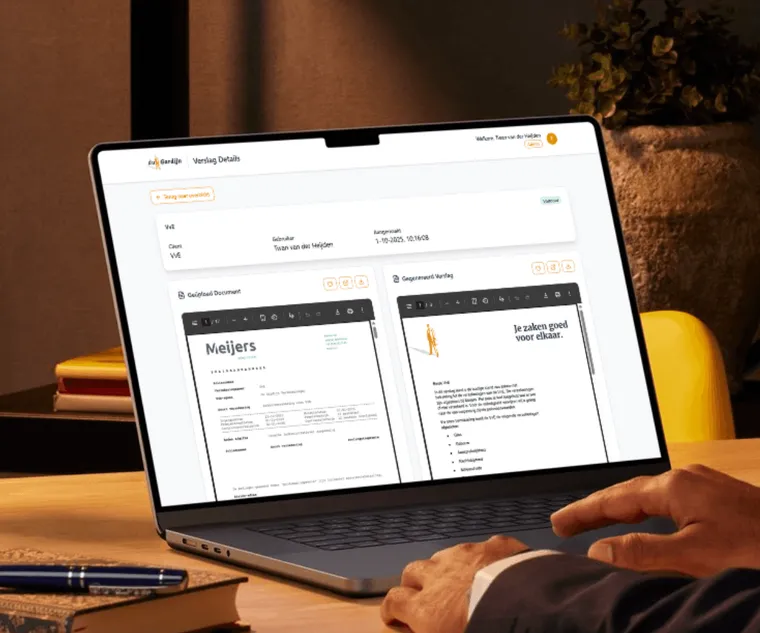
Three engagements, each showing a different building block: setting direction, putting the data layer in place and extending AI month by month.

Our services

From frustration to solution, this is what we do.

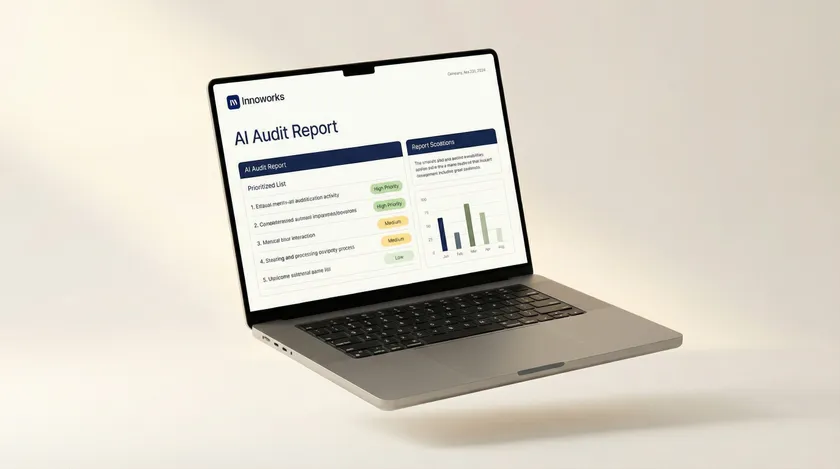
AI audit example

AI audit

Know where AI truly pays off, in two weeks.

In 14 days we map where AI delivers concrete time, money or quality in your business. No hype, no generic tips. Just a report with prioritised opportunities, a live presentation and a clear next step.

14 days From intake to report Fixed lead time
3 deliverables Report, presentation, roadmap Concrete and measurable
Quick wins Scored on impact and feasibility What first and what later
Evidence ROI per opportunity in euros No gut feeling
Learn more

View all services

Where to start

Start with one process.

You do not reorganise around AI in one go. We start with an AI audit or a strategy engagement, choose the process with the most value and build out from there. Fixed scope and price for each step.

Frequently asked questions

Questions you probably have too.

Still have questions? Get in touch
What is a target operating model?

A target operating model (TOM) describes how an organisation needs to work in the future to deliver its strategy: the processes, the organisation and roles, the systems and data, the locations and suppliers, and the way it is managed. The current operating model is the starting point. The gap between the two determines which changes are needed and in what order you make them.

What is an operating model canvas?

The Operating Model Canvas, developed by Andrew Campbell, Mikel Gutierrez and Mark Lancelott, is a widely used way to describe an operating model on a single page. It starts from the value proposition and works it out in six building blocks, summarised as POLISM: processes, organisation, locations, information, suppliers and the management system. For an AI operating model you record, for each building block, what AI does: which process steps AI carries out, which roles change as a result, which information and systems AI needs and how it is governed.

What is the difference between an AI operating model and a target operating model?

A target operating model describes how your organisation needs to work in the future: processes, people, systems and governance. An AI operating model is a target operating model that includes AI as a worker. AI does not get a corner of its own; it has a place in every layer: which tasks AI takes over, how people work alongside it, which data and systems sit underneath and which agreements that requires.

How do you prepare your organisation for AI?

Start with the question of which processes deliver the most value, not with the tools. Make sure the data and systems for those processes are accessible, appoint an owner for each process, agree how staff use AI and start with one process that shows results within weeks. From there you scale up, team by team.

How long does it take to set up an AI operating model?

You see the first step, one process with a measurable result, within weeks. An organisation-wide AI operating model grows over months to years, layer by layer. At Burgstate we have been working month by month since late 2025 on an ongoing AI programme that now spans four departments.

Who owns AI in the organisation?

Ultimate accountability sits with senior management, not with IT alone. For each process you appoint an owner from the business who decides what AI does and checks that it works. Larger organisations often appoint a Chief AI Officer or a similar role; in mid-sized organisations an external partner can partly fill that role.

What does an AI operating model mean for employees?

Work shifts from doing to checking, improving and dealing with customers. Repetitive tasks decrease, and the roles that remain call for more judgement. That takes explanation, training and honest communication about what is changing. The aim is usually to grow without a matching rise in headcount, not to cut jobs.

Do you need an AI operating model if you already use Copilot or ChatGPT?

Yes, especially then. Tools such as Copilot and ChatGPT make individual employees more productive, but they do not change the way the organisation works by themselves. An AI operating model makes sure the gain does not stay with individuals: processes, data and agreements are set up so that AI takes over work structurally.

How does an AI operating model relate to an AI Operating System?

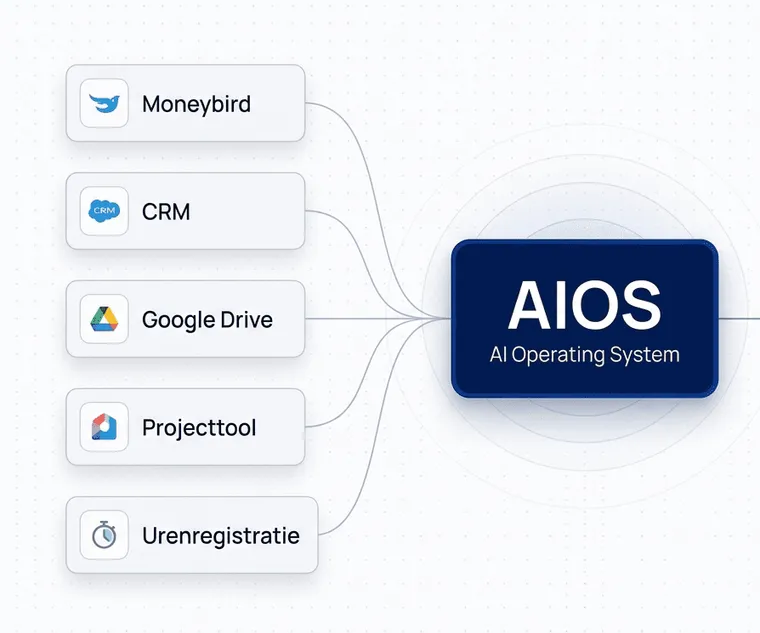
The AI operating model is the organisational side: how you work, decide and govern. An AI Operating System is the technical layer underneath, which connects your data, systems and knowledge so AI can work with them. One you design, the other you build; together they make AI a fixed part of how the business runs.

What does it cost to set up an AI operating model?

That depends on the size of your organisation and the pace you choose. We work in steps with a fixed scope and price for each step, starting with an AI audit or a strategy engagement. Book an intro call for an estimate for your organisation.

You can feel it has to change,
we show you how.

You know where the friction is. We help you figure out how AI can genuinely fix it.

Not ready for a conversation yet? Get honest AI advice first →

30 minutes. Online or in Enschede. You decide.