 Case study
DigiSocial
For DigiSocial we built an internal web app with three AI modules, letting account managers generate client research, audits and weekly updates largely automatically.

The situation
DigiSocial is a fast-growing performance marketing agency in Berlin. Their account managers run Meta ad campaigns for clients, and with every new client the same work starts over: figuring out who the competitors are, what is happening in the market, what the audience is saying, and later writing weekly audits and updates. A lot of manual work, a lot of repetition, and as they grow it means less time for the real work.
The question they put to us was not "build a standalone AI tool". The question was: build a foundation we can keep building on for years to come, that grows with the business and that we can keep extending ourselves.
Our approach
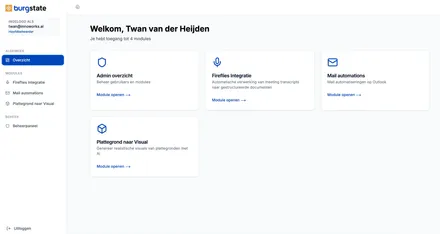
We started with a focused inventory, not with building. First getting clear on which processes lend themselves to AI, which inputs and outputs are decisive per process, and where the human needs to stay in control. Then, together with DigiSocial, we worked out one shared architecture: a web app that holds all the modules, with a single login for the team and a shared AI layer underneath. That way each module can be built and delivered separately, while the whole thing rests on the same foundation.
Only once that setup was crisp and approved did we start building. Module by module, with iteration rounds in between where we sharpened prompts based on usage, added sources and built up quality step by step.
What we built
Three modules, in one web app, running in production:
Module 1: Client research. An account manager starts a new client and the web app automatically delivers ready-to-use market and competitor research. The account manager can still update the final result section by section, with prompts or manually, before it goes to the client.
Module 2: Audit. Generates a complete audit from campaign data, with room for the account manager to add their own observations, advice and expected impact. The output fits straight into DigiSocial's existing reporting template.
Module 3: Weekly client updates. Analyses week-on-week performance, generates a draft update for the client, and gives the account manager control to review, edit and send.
To make this possible, the modules connect to more than ten different sources and systems, from advertising platforms and market data to public discussion sources and internal DigiSocial documents. Exactly which ones is part of their way of working, and therefore not something we share here.
How we built it
For each module we followed the same rhythm: first make sure the right data comes in, then the AI processing, then the interface the account manager works with, then the final output. Feedback and iteration with the DigiSocial team between every step.
The principle we hold to: AI does the groundwork, the human delivers the final quality and judgment. All three modules are set up so the account manager can always step in, steer and refine before anything goes to the client.
Where we stand now
The web app is running in production. All three modules are in use by the DigiSocial team. The collaboration continues: we keep refining modules based on usage, and keep building on the foundation that is in place now.
Other cases
See a few more cases below.